What children can do with what they know - Our 16 Skills in Practice
At Berlin Cosmopolitan School, learning is not only about what a child knows.
It is also about what a child can do with that knowledge.
Can they think independently?
Can they ask meaningful questions?
Can they reflect on mistakes and learn from them?
Can they work with others?
Can they take responsibility?
Can they courageously try something new?
These are the questions behind our 16 Skills in Practice.
They describe the abilities, habits and mindsets children need in order to grow — not only as students, but as people.
Learning beyond knowledge
Knowledge matters. Academic learning matters. But knowledge alone is not enough.
Children also need to learn how to apply what they know, how to adapt to new situations, how to collaborate, how to stay curious, how to keep going when something becomes difficult, and how to contribute meaningfully to the world around them.
That is why we focus on our 16 Skills in Practice:
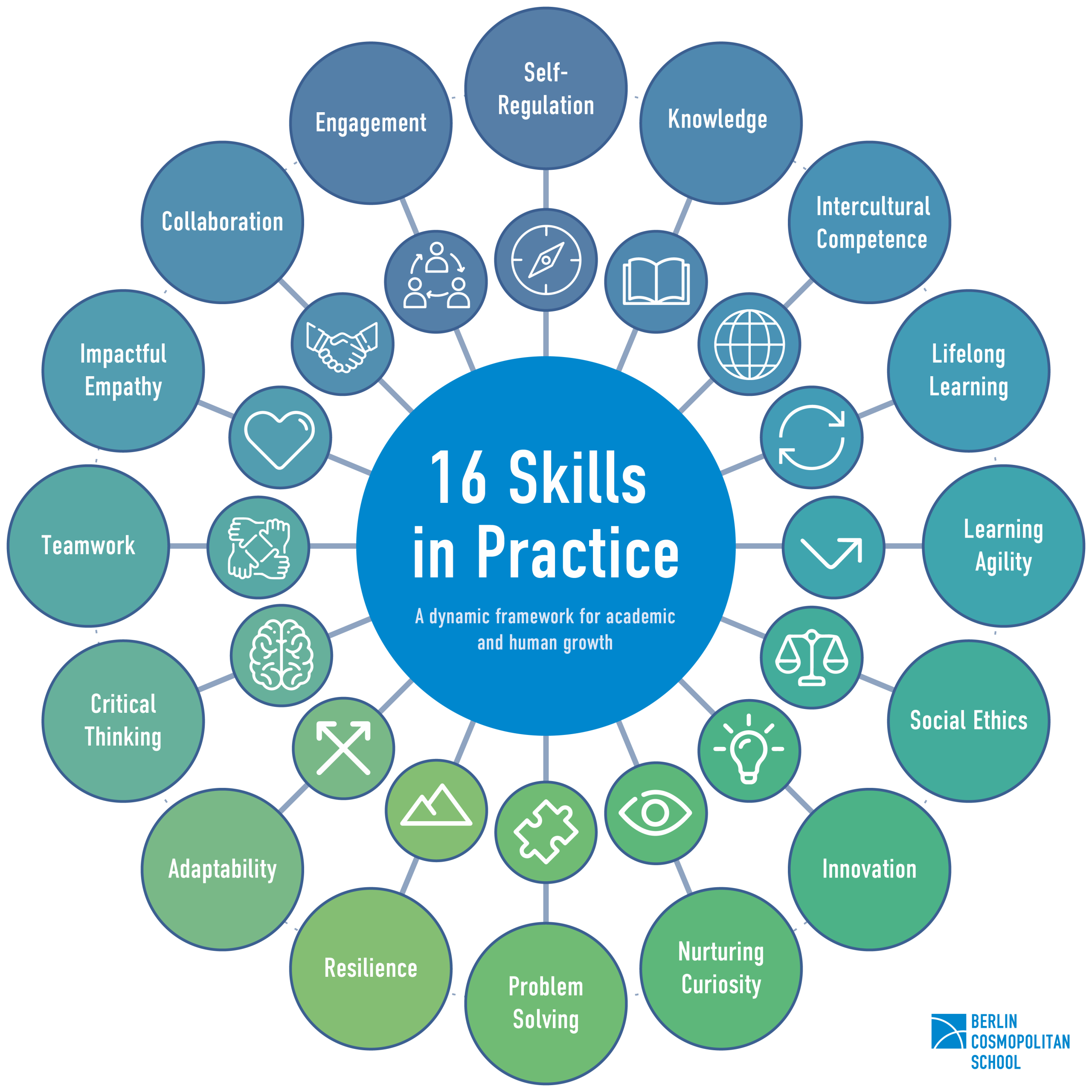
Self-Regulation
Sich selbst steuern, fokussiert bleiben und Verantwortung für das eigene Handeln übernehmen.
Knowledge
Wissen aufbauen, verstehen und sinnvoll anwenden.
Intercultural Competence
Andere Kulturen verstehen, respektieren und offen miteinander umgehen.
Lifelong Learning
Offen bleiben, dazulernen und Herausforderungen als Chance sehen.
Learning Agility
Schnell lernen, flexibel denken und Neues anwenden.
Social Ethics
Fair handeln, Verantwortung übernehmen und an andere denken.
Innovation
Neue Ideen entwickeln und kreative Lösungen finden.
Nurturing Curiosity
Fragen stellen, entdecken wollen und Interesse zeigen.
Problem Solving
Herausforderungen erkennen, durchdenken und Lösungen finden.
Resilience
Dranbleiben, Rückschläge aushalten und weiter wachsen.
Adaptability
Sich auf Veränderungen einstellen und flexibel reagieren.
Critical Thinking
Informationen prüfen, hinterfragen und eigene Schlüsse ziehen.
Teamwork
Gemeinsam arbeiten, zuhören und einander unterstützen.
Impactful Empathy
Andere verstehen und mitfühlend ins Handeln kommen.
Collaboration
Ideen teilen, gemeinsam gestalten und Verantwortung verbinden.
Engagement
Sich aktiv einbringen, Verantwortung zeigen und etwas bewirken.
These skills do not grow through theory alone. They develop through real experiences, active participation and meaningful challenges.
Where skills become practice
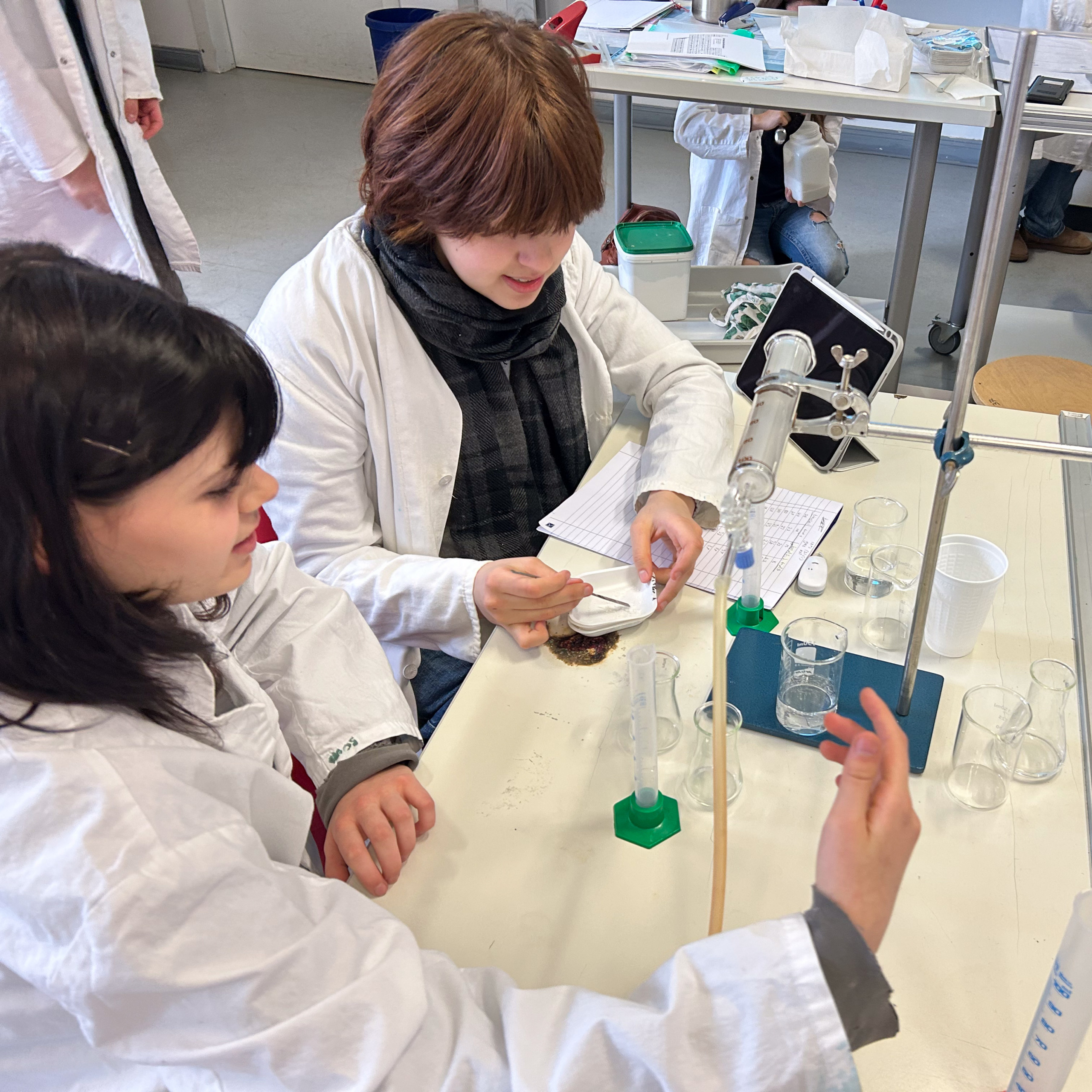
At BCS, children develop these skills in many different learning environments: in the classroom, in the forest in Prenden, at Müggelsee, on the water, in sports with friends, on class trips, on stage, through music, dance and art, in projects, while cooking, in the wood workshop, during competitions, through Robotics, Coding, MUN, TEDx, Summer and Winter Shows — and in everyday school life.
Each of these experiences gives children the opportunity to practise something important:
to listen, to lead, to try, to fail, to rethink, to support others, to solve problems, to take responsibility, and to grow.
A mindset for life
At BCS, children learn:
I cannot do this yet — but I can learn it.
Mistakes are not failure — they are learning material.
Not everyone is equally strong in everything — but everyone can try, contribute and grow.
This is what we mean by We-Q instead of IQ.
Children learn with and from others. They experience that knowledge, courage, empathy, discipline, perseverance and collaboration belong together. They understand that learning does not only happen in the mind, but also through action, reflection, experience and shared responsibility.
Preparing children for what comes next
The 16 Skills in Practice connect academic learning with character development, creativity, social responsibility and practical experience.
They make visible what modern education needs to do today: prepare children for exams — and for life beyond them.
At BCS, we believe that children need both:
Screen, where technology expands learning.
Green, where real-world experience shapes thinking, character and humanity.